The Haymarket
66 W 30th St at 6th Ave (Tenderloin)
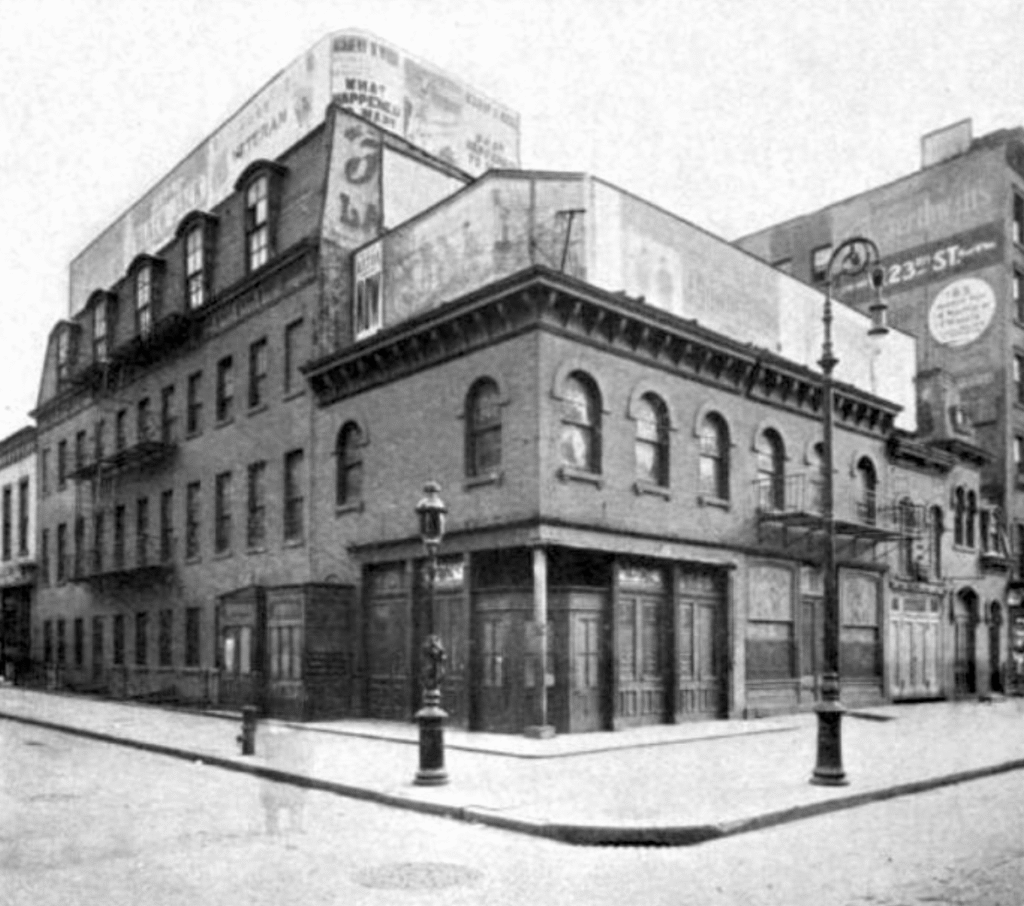
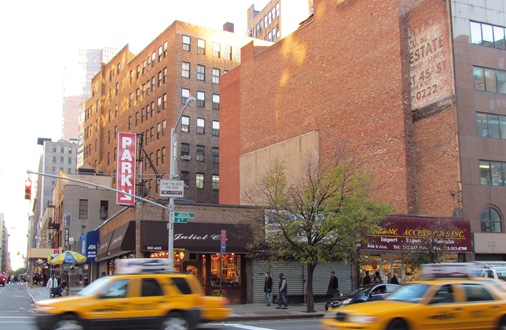
The Tenderloin's Most Notorious Address
When The Haymarket threw open its doors in the 1870s on the west side of Sixth Avenue near 30th Street, it planted its flag in the beating heart of the Tenderloin — that gaslit stretch roughly bounded by 23rd and 42nd Streets west of Sixth Avenue, christened by Police Captain Alexander "Clubber" Williams, who famously declared upon his transfer there that he had been eating chuck steak his whole career and was now ready for tenderloin.
The building itself was a converted three-story former theater, its facade deceptively plain, its interior a blaze of gaslight, gilt, and cigar smoke. A twenty-five-cent admission (waived for women, who were considered part of the attraction) bought entry to a cavernous ground-floor dance hall ringed by a long mahogany bar, a bandstand for the house orchestra pounding out waltzes, polkas, and the racier can-can, and a horseshoe balcony of curtained private boxes overlooking the floor. Upstairs, smaller rooms accommodated arrangements the management officially knew nothing about. Beer flowed at ten cents a glass, champagne at prices calculated to punish the unwary, and the dancing rarely stopped before dawn.
Slumming in the Gilded Age
By the 1880s, "slumming" had become a fashionable pastime for the uptown set — the very Four Hundred who curtsied at Mrs. Astor's ballroom by night might, a few hours later, be steered by a knowing cabman toward Sixth Avenue for a glimpse of the demimonde. The Haymarket was the crown jewel of these expeditions. Gentlemen in evening dress, sometimes with adventurous wives or mistresses in tow, arrived to watch (and occasionally join) shopgirls, chorus girls, sailors, gamblers, and the professional women the press delicately called "unfortunates."
The codes were understood by all. A lady in a private box was not to be approached; a woman on the dance floor alone was. Pickpockets — some of them the dancers themselves — worked the crowd with surgical precision, and the papers were full of swells who woke up in boardinghouses minus their watches and wallets. None of this was accidental or even particularly illegal, because the Tenderloin ran on police protection. Captain Williams and his successors collected steady tribute from saloons, brothels, and gambling dens; the Lexow Committee would later estimate the Tenderloin graft alone at millions per year. The Haymarket paid its share and danced on.
In HBO's The Gilded Age
In Season 3 Episode 5 ("A Different World"), Larry Russell drags Jack Trotter to The Haymarket under the pretense of a bachelor dinner at Delmonico's. Inside, Larry spots Maud Beaton — Oscar van Rhijn's ex who swindled him — working the floor. She denies being herself, and Marian later discovers the deception, triggering serious drama. Director Deborah Kampmeier built the set with women boxers, bearded ladies, gambling tables, and dancing — a vivid distillation of the real Haymarket's anything-goes character.
The Haymarket matters dramatically because it collapses the distance the Gilded Age worked so hard to maintain. A Russell or a van Rhijn could ride a private carriage from a Fifth Avenue mansion to Sixth Avenue in under fifteen minutes; the moral geography was vast, the actual geography almost nothing. By letting Larry cross that line, the show reminds viewers that the period's extraordinary wealth was never sealed off from the poverty, sex work, and police corruption that shared its sidewalks — the ballroom and the dance hall were two rooms in the same house.
Reform and Demolition
The Haymarket's reckoning came from the pulpit. In February 1892, the Reverend Dr. Charles Parkhurst of Madison Square Presbyterian Church delivered a sermon denouncing Tammany Hall as a "lying, perjured, rum-soaked, and libidinous lot," then hired a private detective and toured the Tenderloin himself to gather evidence — a scandalous bit of clerical fieldwork that included a stop at The Haymarket. His crusade forced the state legislature to convene the Lexow Committee in 1894, whose hearings exposed the NYPD's protection rackets in excruciating detail and helped sweep Tammany from City Hall that November.
The Haymarket staggered on through raids, closures, and reopenings under new names until it finally went dark in 1911, and the building was demolished soon after. The Tenderloin itself dissolved as the garment trade pushed north and the theater district migrated to Times Square. Today the block sits within the NoMad neighborhood, a short walk from both the Fashion Institute of Technology and the Hudson Yards development, its riotous past buried beneath unremarkable commercial architecture.
Exact historical address well-documented: 66 West 30th Street at Sixth Avenue. Operated c.1872–1911 in the Tenderloin district.