Academy of Music
14th St & Irving Place
The Old Guard's Opera House
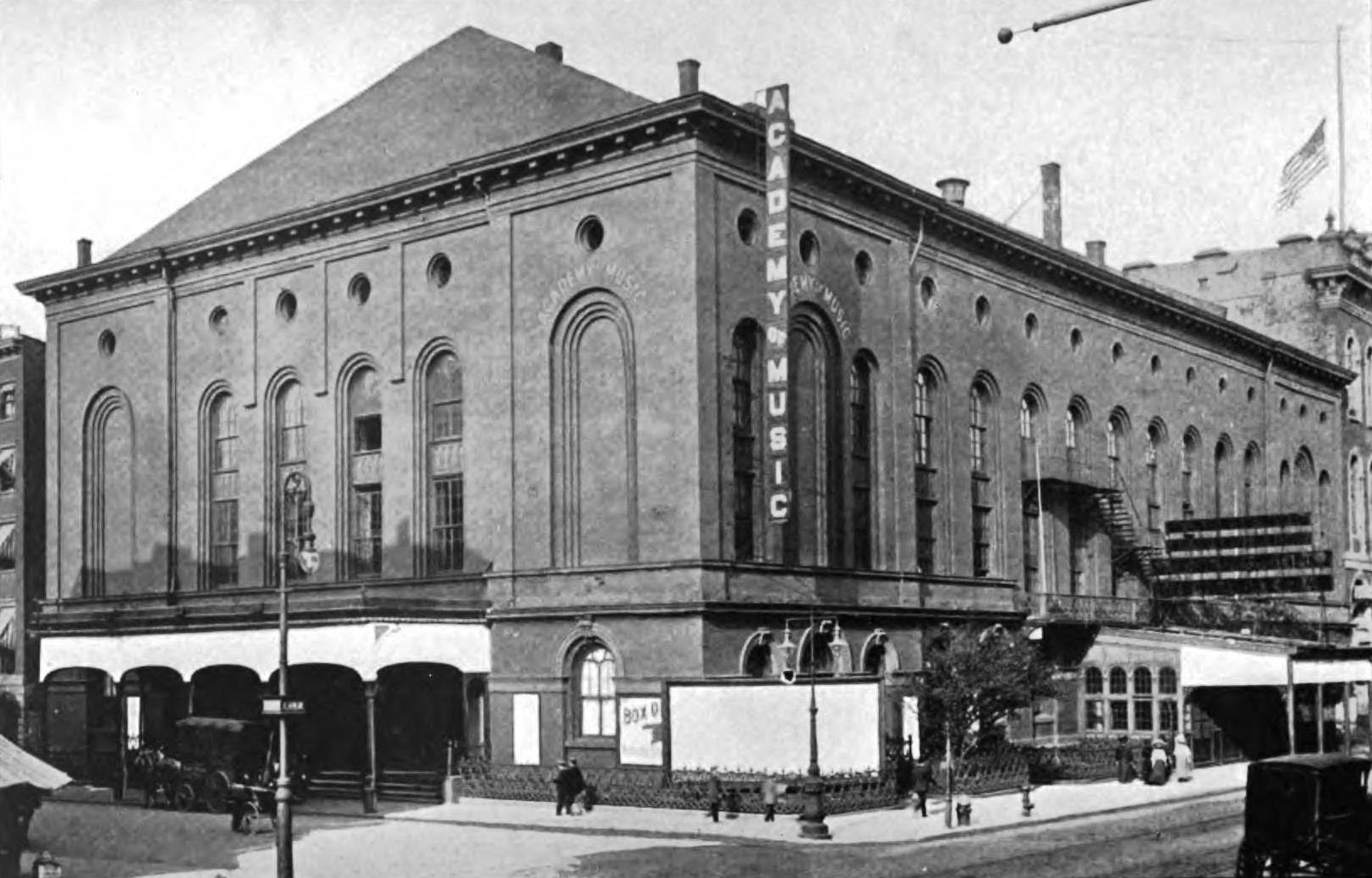
When the Academy of Music opened its doors on October 2, 1854, at the northwest corner of 14th Street and Irving Place, it was the largest opera house in the world, seating roughly 4,600. Designed by German-born architect Alexander Saeltzer in a restrained Italianate style, its red-brick and brownstone facade gave little hint of the gilt and crimson plush within. The building replaced an earlier opera house on Astor Place and was financed by a consortium of wealthy New Yorkers determined to give the city a permanent home for Italian opera.
What truly defined the Academy, however, was not its acoustics but its boxes. Only eighteen private parterre boxes ringed the auditorium, and they were held, generation after generation, by the same Knickerbocker families: Astors, Schermerhorns, Roosevelts, Beekmans, Livingstons, Cuttings, and Bayards. To possess a box at the Academy was to possess social legitimacy itself. The boxes were inheritable property, jealously guarded, and almost never sold. For Mrs. Astor and her circle, Monday nights at the Academy were less about Verdi than about being seen by precisely the right people, and not seen by the wrong ones.
The War of the Opera Houses
By the late 1870s, the new industrial fortunes of the Vanderbilts, Goulds, Morgans, Rockefellers, and Whitneys had eclipsed the old Knickerbocker wealth many times over. Yet when these families approached the Academy seeking boxes, they were turned away. There were simply none to be had, and the old guard had no intention of expanding the parterre to accommodate parvenus, no matter how rich. William H. Vanderbilt is said to have offered $30,000 for a single box and been refused.
The response was characteristically Gilded Age: if they could not buy in, they would build bigger. In April 1880, sixty-five subscribers each pledged $10,000 toward a new opera house, and on October 22, 1883, the Metropolitan Opera House opened on Broadway at 39th Street with 122 boxes, enough for every aspiring family in town. The Academy fought back for two seasons, importing star sopranos and slashing prices, but the financial bleeding was fatal. In 1886, after losing some $300,000, manager James Henry Mapleson surrendered. The Academy abandoned grand opera forever and was converted to vaudeville and melodrama. The old guard had lost not just an opera house but the cultural high ground itself.
In HBO's The Gilded Age
Season 1 of HBO's "The Gilded Age" turns the Academy of Music into the central battleground for Bertha Russell's relentless social climb. In one of the season's most memorable scenes, Bertha is icily informed that no box will be made available to her, no matter the price, a humiliation that sets the stage for her embrace of the upstart Metropolitan Opera. The series compresses and personalizes the real Vanderbilt-era box war, casting Bertha as a stand-in for Alva Vanderbilt, whose ambitions famously helped doom the old house. The Academy is also the setting for some of the gentler subplots of Season 1, including Tom Raikes's courtship of Marian Brook in its lobbies and corridors.
The original Academy was demolished a century ago, so the production team filmed interior scenes at the Troy Savings Bank Music Hall in Troy, New York, an 1875 jewel box of a concert hall whose horseshoe balconies, ornate plasterwork, and red-and-gold palette closely echo what Gilded Age operagoers would have seen on 14th Street. It remains one of the most acoustically celebrated 19th-century halls in America and is still in active use today.
From Opera House to NYU Dorm
After grand opera departed in 1886, the Academy lived on as a populist house, presenting vaudeville, melodrama, and eventually silent films, before being demolished in 1926 to make way for a Consolidated Edison office expansion. For decades the corner held no trace of its musical past. Then in 1985, designer Arata Isozaki transformed the old Academy site's neighbor into the Palladium, a cavernous nightclub that became the spiritual successor to Studio 54. Steve Rubell and Ian Schrager ran it; Andy Warhol, Keith Haring, Jean-Michel Basquiat, and Francesco Clemente all contributed artwork to its walls. Through the late 1980s and early 1990s, the Palladium was downtown nightlife.
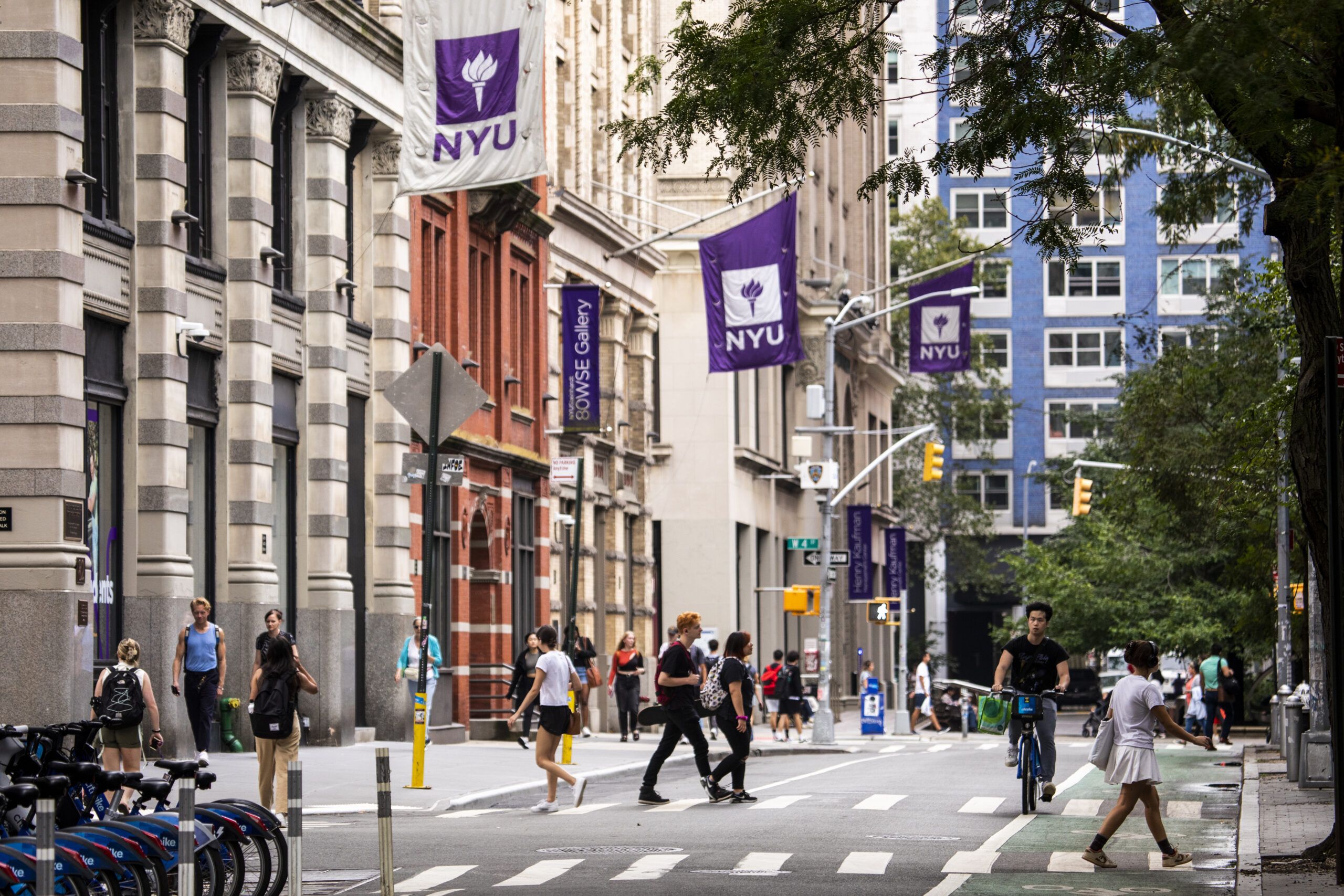
The club closed in 1997, the building was demolished, and an AMC Loews multiplex briefly occupied part of the block before NYU acquired the site. Today the address belongs to Palladium Hall, an NYU dormitory and athletic facility housing roughly 1,000 students.
Exact historical address at 14th St & Irving Place. 97% confidence. Interior filming used Troy Savings Bank Music Hall, Troy, NY. Original building demolished 1926.