Bloomingdale's (original)
3rd Ave & 59th St
The Great East Side Bazaar
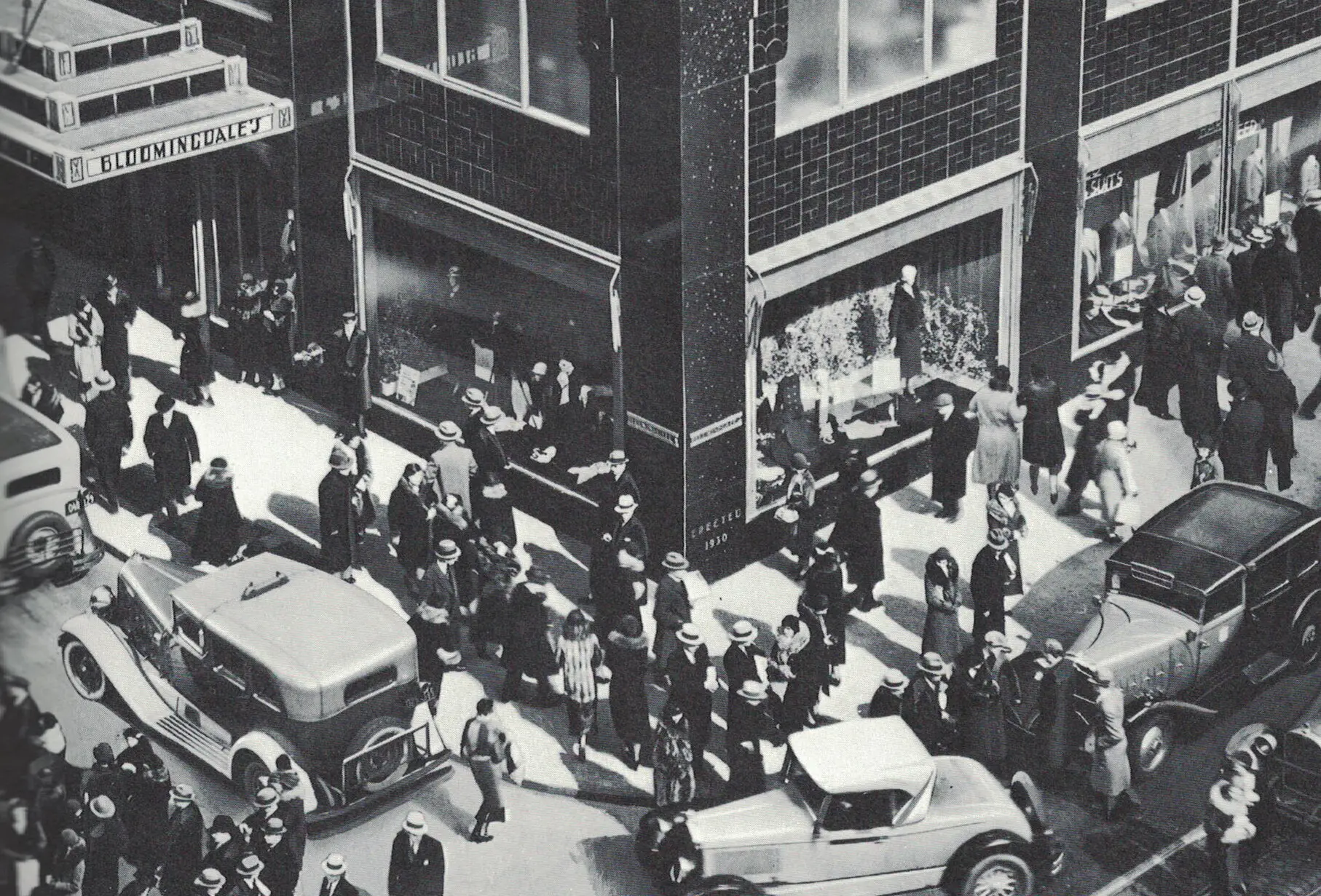
Lyman and Joseph Bloomingdale learned retail selling hoop skirts, and when the hoop skirt died they made a bet on two things: the department store, and the East Side. Their "Great East Side Bazaar" opened in 1872 on Third Avenue in the 50s, far from the established shopping district of Ladies' Mile downtown — a gamble that looked eccentric until the Third Avenue elevated railroad arrived in 1878 and began delivering customers to their doorstep. The brothers expanded relentlessly along the block, and by the mid-1880s Bloomingdale's occupied its now-famous corner at 59th Street, selling everything from carpets to corsets under one roof. Where the great downtown stores served the carriage trade, Bloomingdale's rode the El — a department store built on mass transit, in the neighborhood where the show's mansions were rising.
Shopping as Liberation
The department store was one of the quiet revolutions of the Gilded Age, especially for women. It was among the very first public spaces where a respectable woman could spend an afternoon unescorted — browsing, lunching, meeting friends — without any social penalty. Fixed prices ended haggling; free entry ended the obligation to buy; plate-glass windows turned merchandise into spectacle. The show uses shopping this way repeatedly: expeditions to the stores are among the few occasions when Marian Brook, Bertha Russell, and Peggy Scott can move through the city on their own errands, in public, with money in hand.
Peggy's Scene
The show's Bloomingdale's sequence is one of its most pointed depictions of racial prejudice: a shop assistant follows Peggy Scott through the aisles, surveilling her as a suspected shoplifter simply because she is Black — despite her obvious refinement and means. The scene captures with precision the daily indignities Black Americans navigated even in upscale Northern spaces, where no law barred the door but suspicion followed a customer through every department. The liberating public space the store offered white women, the scene makes clear, was offered to Peggy only conditionally. The sequence was filmed in the Cannon Building in Troy, New York, whose preserved nineteenth-century commercial interior stands in for the 1880s sales floor.
Bloomingdale's Today
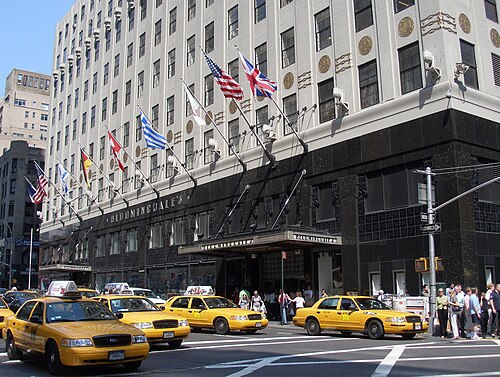
Alone among the great Gilded Age department stores of New York, Bloomingdale's never left its corner. The flagship at 59th Street and Lexington Avenue — a block east of the original Third Avenue frontage — grew to consume the entire block by the twentieth century and remains one of the city's iconic stores. Standing at 59th and Lex today, you are one of the few places in New York where the retail geography of 1885 is still doing business under the same name.
Historical address of original Bloomingdale's well-documented. Filming used Cannon Building, Troy, NY.
Books & Tours
Some links are affiliate links — we may earn a small commission at no cost to you.