Union Club (original location)
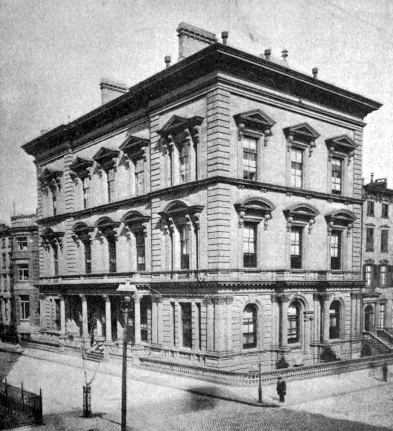
5th Ave between 51st & 52nd St
The Mother of Clubs
Founded in 1836, the Union Club is the oldest gentlemen's club in New York and the institution on which the city's entire club culture was modeled. Its premise was simple and merciless: membership was the definitive certificate of social arrival, governed by election, and a single blackball could keep a man out forever. Over the nineteenth century its clubhouses climbed Fifth Avenue with society itself, each move tracking the fashionable frontier northward — this pin marks the site of its grand quarters on Fifth Avenue between 51st and 52nd Streets, in the heart of the mansion district the show depicts. Inside were the rituals of elite male life: the card room, the billiard room, the library where no one read, and the great windows from which members famously surveyed the avenue.
Blackballs and Breakaways
The club's exclusivity generated its own rivals. In 1871, members dissatisfied with what they considered slipping standards broke away to found the even choosier Knickerbocker Club. Twenty years later the current ran the other way: in 1891, after the Union Club blackballed men he had sponsored, J. P. Morgan responded in the most Gilded Age manner imaginable — he built a grander club. The Metropolitan Club, in a Stanford White marble palace at 60th and Fifth, was promptly nicknamed the "Millionaires' Club," and it existed precisely to admit the new-money men the Union Club would not. The whole cycle — old guard, blackball, and a new fortune building its way around the door — is the show's central social plot rendered in real estate.
In HBO's The Gilded Age
In the series, the club is where George Russell and the city's financiers conduct the deals too delicate for offices, and where Oscar van Rhijn maintains the standing his name entitles him to. The show understands what clubland was for: it was the male counterpart of Mrs. Astor's ballroom, a closed room where reputation was currency and admission could not be bought — only conferred. For a man like Russell, modeled on the railroad titans whom the real Union Club kept waiting for years, every lunch inside its doors is a small conquest.
The Club Today
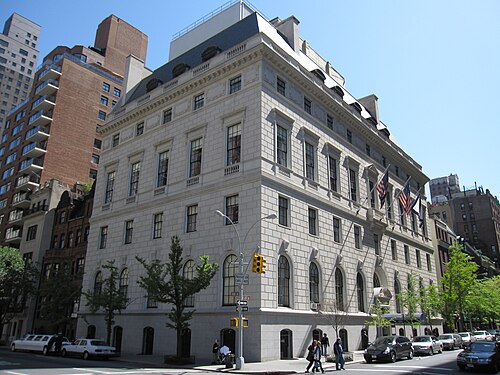
The Union Club made its final move in 1933, to a dignified limestone clubhouse by Delano & Aldrich at 101 East 69th Street, where it continues today — private, quiet, and closing in on its third century. The Fifth Avenue site this pin marks was absorbed into Midtown's commercial canyon; nothing of the clubhouse remains, though the Knickerbocker and Metropolitan Clubs, its offspring and rival, both still occupy their historic buildings nearby.
Club founded 1836. By the 1880s (the show's era) it had moved to 5th Ave between 51st & 52nd St. Now at 101 E 69th St since 1933.